You’ve got a fresh oil stain. Maybe a splash of salad dressing, a drop of olive oil, or a greasy fingerprint on a clean sleeve. Whatever it is, the clock is ticking.
Your first instinct might be to grab a napkin and start scrubbing frantically. Don't do it. Rubbing only grinds the oil deeper into the fabric's fibers, turning a minor mishap into a permanent problem. The key to success is to act fast, but act smart.
Blot and Absorb: Your First Line of Defense
Oil and water are natural enemies, which is why a grease stain creates a stubborn barrier that soap and water can’t easily penetrate. Your mission in these first few critical moments is to lift as much of that oil out of the garment as possible before it has a chance to settle in.
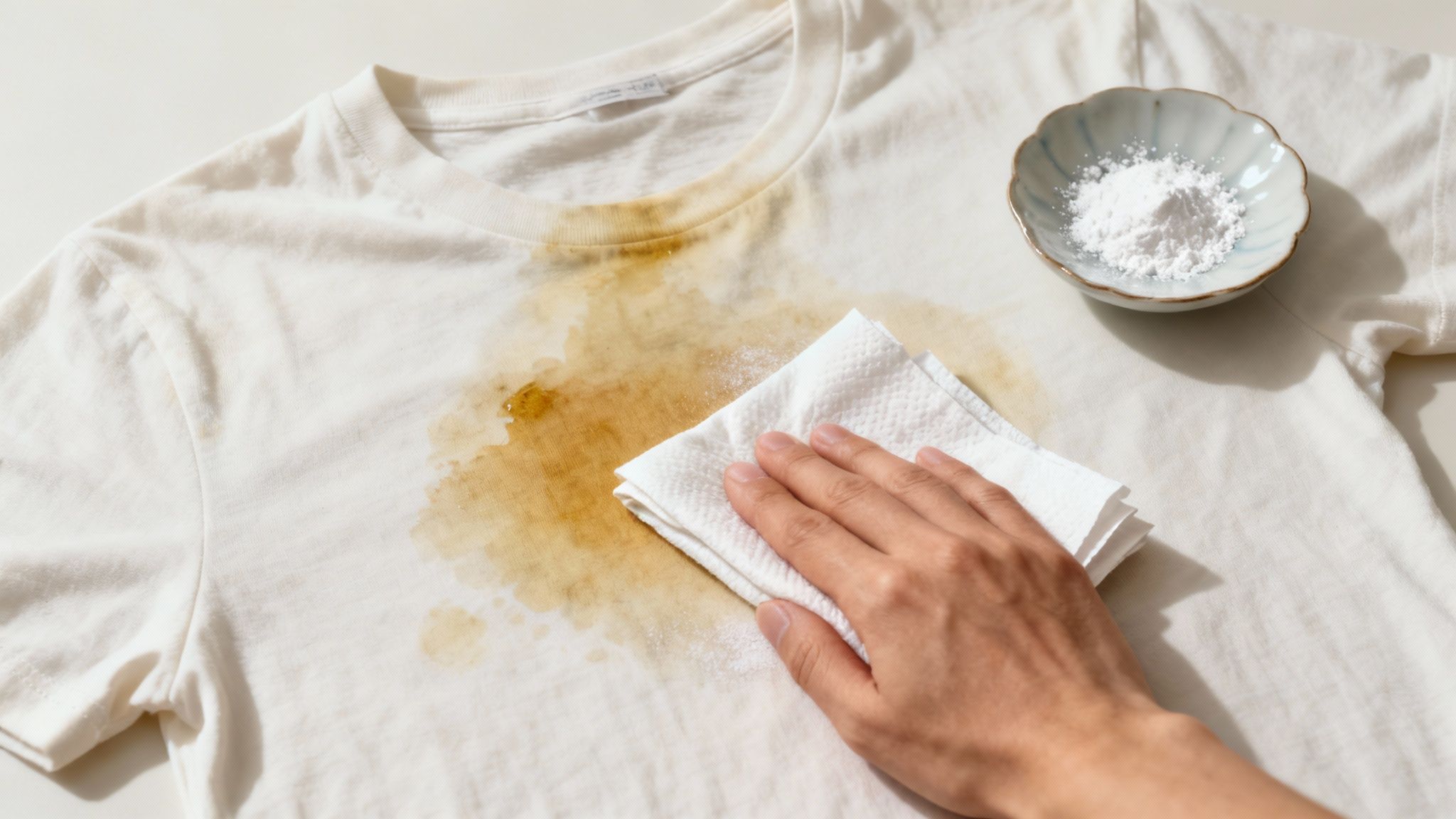
First, gently blot the stain with a clean paper towel or cloth. The goal here is just to wick away any excess oil sitting on the surface.
Next, it’s time to call in the absorbents. You don’t need a fancy stain remover for this part; the best tools are probably already in your kitchen pantry.
- Cornstarch: This is my go-to. It’s incredibly fine and works wonders at pulling oil out of even tightly woven fabrics.
- Baking Soda: A fantastic alternative that not only absorbs the grease but also helps tackle any lingering odors.
- Baby Powder: The fine particles are perfect for drawing out oils, especially on delicate fabrics.
Be generous. Completely cover the stain with a thick layer of your chosen powder. Now, let it sit. You’ll need to give it at least 30 minutes, but for a heavier spill, an hour or more is even better. You’ll literally see the powder start to darken and clump up as it soaks up the oil. It’s a beautifully simple and effective process.
This initial absorption step is the single most important thing you can do for a fresh oil stain. It pulls the grease out of the fabric's weave, setting the stage for your detergent to finish the job and preventing that dreaded, shadowy mark that can sometimes appear after washing.
Once the powder has worked its magic, just gently scrape it off with a spoon or a soft-bristled brush. Your garment is now pre-treated and ready for the next step. This same principle of immediate action applies to other stubborn, waxy residues. For instance, you can find some great expert tips on how to get candle wax out of clothes that follow a similar logic.
For a complete walkthrough on tackling other common blemishes, check out our full guide on how to remove stains from shirts.
Quick Guide to Removing Fresh Oil Stains
Here's a rapid-response plan for tackling oil stains the moment they happen, setting you up for a successful wash.
| Action Step | Why It Works | What You Need |
|---|---|---|
| Gently Blot | Removes excess surface oil without pushing it deeper into the fabric fibers. | Clean paper towel or cloth |
| Cover with Powder | The powder absorbs and lifts the liquid grease out of the fabric’s weave. | Cornstarch, baking soda, or baby powder |
| Let It Sit | Gives the absorbent enough time (30+ minutes) to draw out the maximum amount of oil. | Patience! |
| Scrape Away | Removes the oil-soaked powder, leaving the fabric ready for washing. | Spoon or soft brush |
This simple, four-part process is your best defense against a fresh oil stain, ensuring it disappears completely in the wash without a trace.
The Ultimate Pre-Treatment for Most Oil Stains
You’ve lifted the worst of the grease with an absorbent powder, which is a massive first step. Think of it as winning the opening skirmish. Now, it’s time for the main event: a targeted pre-treatment that dismantles the oily residue still clinging to the fabric fibers. You don’t need some hyper-specialized, expensive stain remover for this. In fact, the hero is probably sitting right by your kitchen sink.
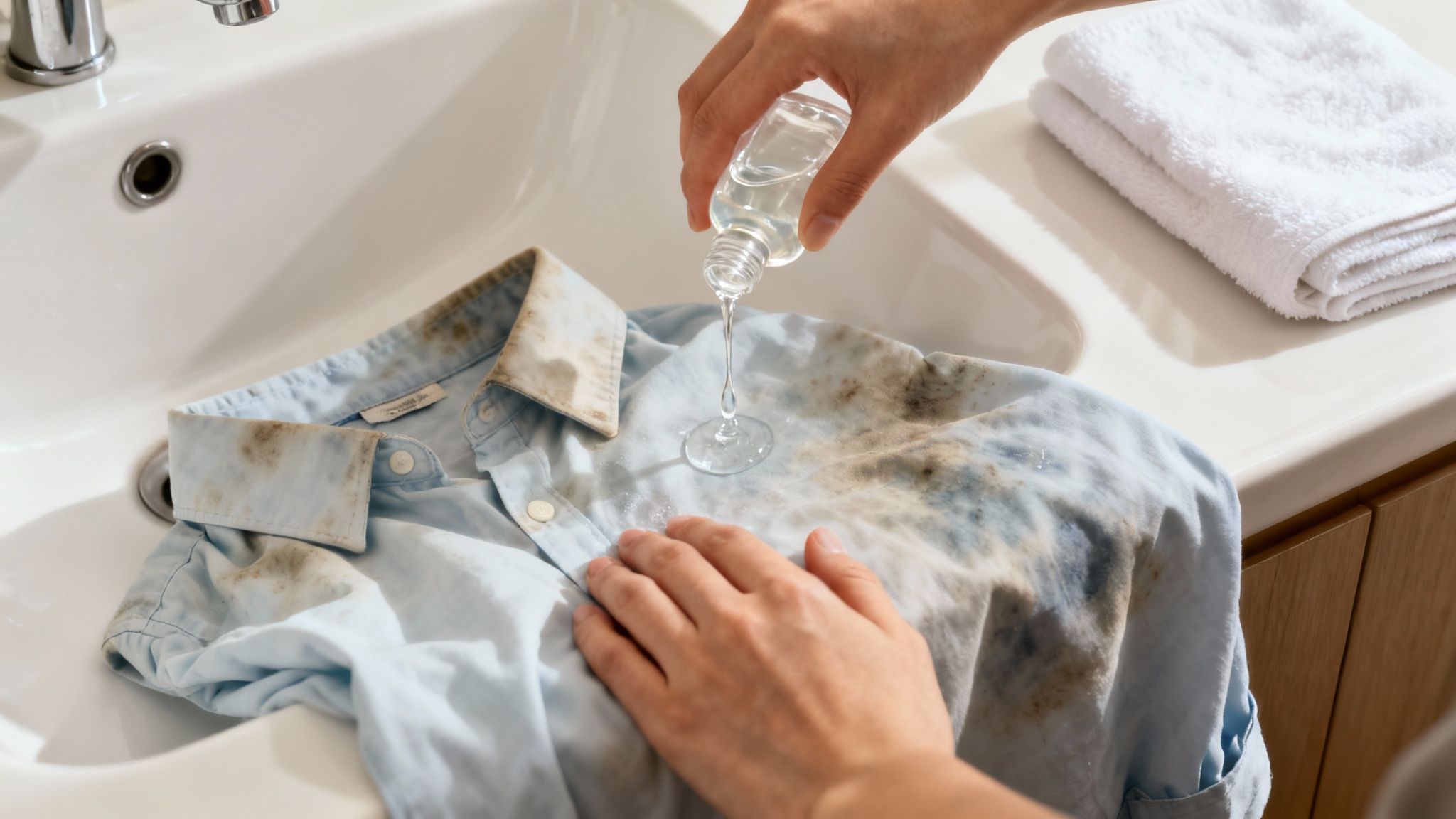
A high-quality liquid dish soap is an absolute powerhouse against grease. It’s literally designed to cut through fats and oils on your dishes, and it does the exact same thing for your clothes. The trick is to grab a clear, dye-free version to avoid any chance of accidentally transferring color onto your garment.
The Right Technique for Pre-Treatment
Just squirting soap onto the stain won't cut it. You have to work it in—gently but thoroughly.
Start by applying a small drop of the dish soap directly onto what's left of the stain. Then, using your finger or a soft-bristled brush (an old toothbrush is perfect), gently massage the soap into the fabric in a circular motion. This is what helps the soap's surfactants really get into the fibers and start emulsifying the oil, breaking it into tiny particles that water can finally wash away.
Now, let it sit for at least 15-20 minutes. This gives the soap time to work its magic. For more delicate pieces, check out this guide on the best way to wash clothes by hand to ensure you’re using the gentlest approach possible.
This pre-treatment step is everything. It’s a chemical process that dismantles the grease that has soaked deep into the fibers, setting it up for a flawless removal in the wash. Rushing this stage is the number one reason a faint, shadowy stain remains after laundering.
Once it has soaked, you can rinse the treated spot with cool water before tossing the garment into the washing machine. This crucial step prepares your clothing for a wash cycle that doesn’t just clean, but truly restores it.
Creating the Perfect Washing Canvas
To finish the job, you need a detergent that delivers a powerful clean without interfering with the sensory experience of your laundry. This is where a high-performance, fragrance-free detergent becomes your greatest ally.
Using an unscented powerhouse like Active Scent's odor-free laundry detergent ensures that every last trace of oil is lifted without leaving behind a competing aroma. It's the ultimate neutral base, carefully formulated for a deep and effective clean, without competing fragrances. This approach prepares the perfect canvas, allowing the bold, luxurious notes of your chosen fabric softener to truly stand out.
Inspired by the spirit of iconic French houses like Dior, Mugler, Chanel, and Le Labo, our fragrances are bold, mysterious, hypnotic, and unforgettable olfactory statements. At Active Scent, our lead perfumer and aroma designer masterfully master light and shadow, creating scents that are as enigmatic as they are energetic. Inspired by the luxurious complexity of raw materials, we use premium, avant-garde, and sometimes exotic ingredients to olfactorily capture the essence of contemporary individuality.
By pairing a neutral, powerful detergent with an exquisite softener, you transform laundry from a chore into a statement. The result is clothing that is not only impeccably clean and stain-free but also carries an unforgettable olfactory signature that is uniquely yours.
Conquering Stubborn and Set-In Oil Stains
We’ve all been there. You pull your favorite shirt out of the dryer, only to find an old oil stain staring back at you—darker and more permanent than before. That heat from the dryer cycle has a nasty habit of baking grease right into the fabric fibers, making it a real challenge to remove.
But don't give up on it just yet. While a fresh spill is one thing, a set-in stain just requires a bit more muscle and the right strategy.
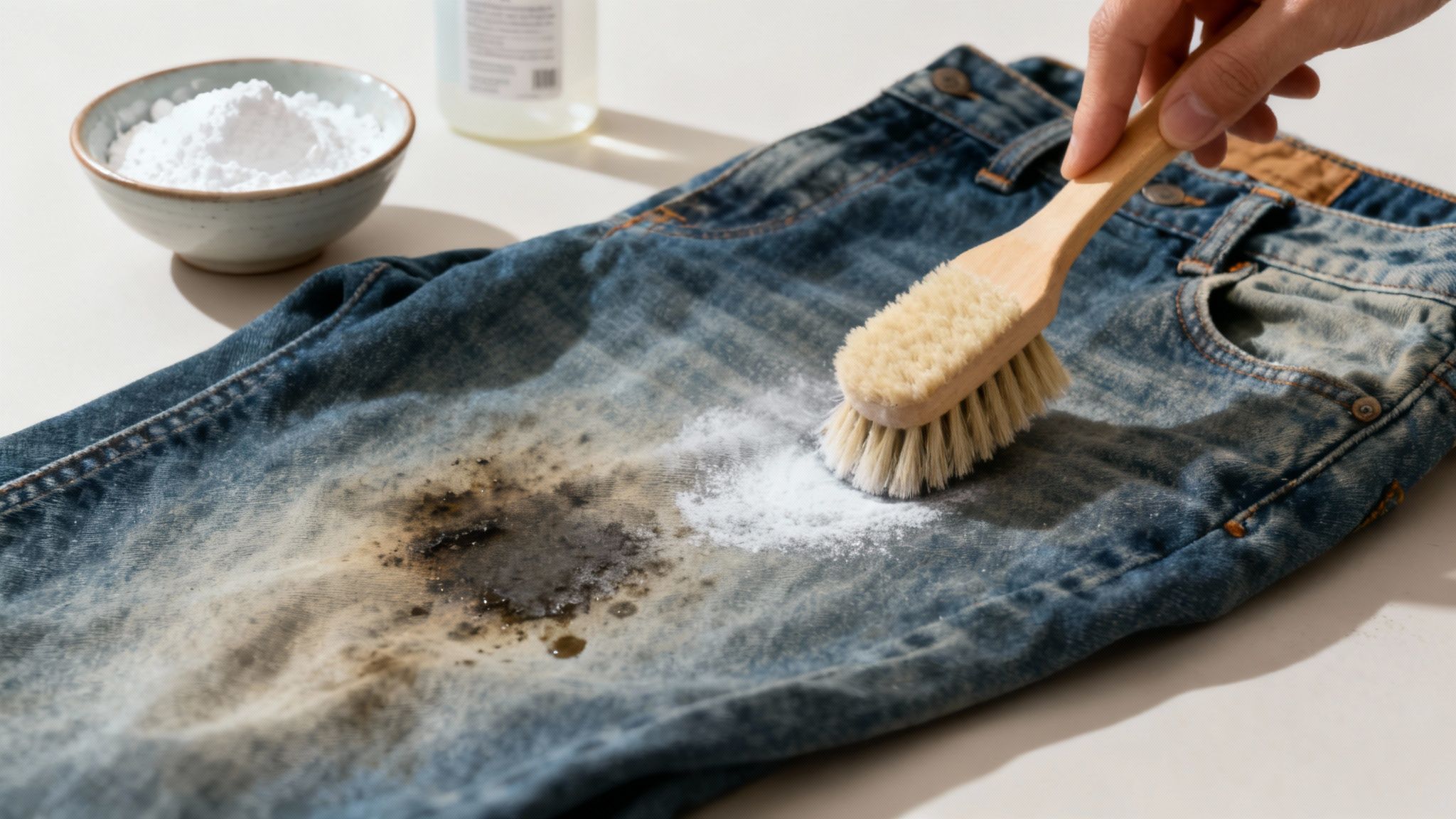
Your usual pre-treatment tricks probably won’t cut it here. Once the oil has set, it polymerizes, creating a much stronger bond with the fabric. To break that bond, we need to move beyond simple dish soap and bring in some more powerful, targeted solutions.
Creating a Potent Baking Soda Paste
A thick paste made from baking soda and water is a surprisingly effective first line of attack. It’s gentle on most fabrics but tough on grease, using a combination of mild abrasion and powerful absorption to draw the old oil out.
- Make the paste: Just mix baking soda with a little water until it has a consistency like thick toothpaste.
- Cover the stain: Slather the paste over the entire stain. Don't be shy with it—you want total coverage.
- Let it dry: Now, just let it sit. The paste needs to dry completely, which can take a few hours. As it dries and hardens, it’s actively pulling that set-in oil from the fabric.
Once the paste is dry and crusty, use a soft brush to gently scrape it all off. This simple step can make a huge difference and prepares the fabric for a deeper clean if needed.
Deploying Solvent-Based Stain Removers
If the baking soda didn't fully lift the stain, it’s time to call in the heavy hitters: a solvent-based stain remover. These products are specifically engineered to dissolve tough oil and grease. Look for cleaners meant for automotive grease or heavy-duty laundry stains; they have the degreasing power needed to break down that polymerized oil.
Always, always do a spot test first. Before you go all-in with a powerful cleaner, test it on a hidden spot like an inner seam. This one small step can save you from accidentally discoloring or damaging the fabric—a much worse fate than the original stain.
Follow the product’s instructions, applying the solvent directly to the stained area. This is where patience really pays off. You'll likely need to let it sit for a good while, sometimes even a few hours, to give it time to work its magic and fully dissolve the old oil.
After the treatment, you can launder the garment as usual. With this targeted, patient approach, you can often rescue those clothes you thought were lost causes and bring them right back into rotation.
Handling Oil Stains on Delicate Fabrics
What works on a tough cotton tee can spell disaster for delicate materials like silk, wool, or suede. When you’re faced with an oil stain on your more sensitive clothing, the entire game changes. Forget aggressive scrubbing or harsh chemicals; saving your favorite investment pieces requires a gentle, almost surgical, approach.
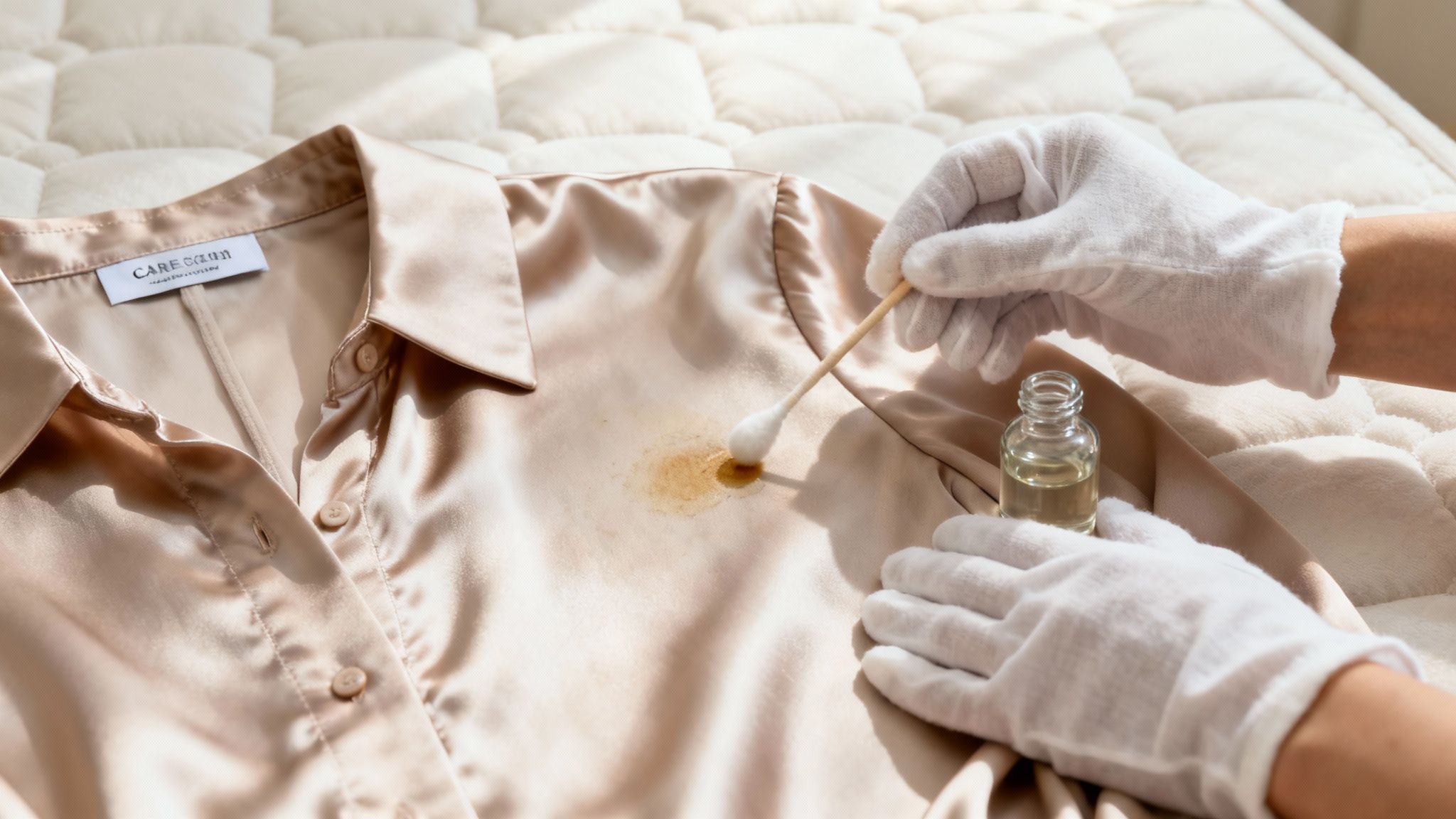
Before you do anything else, read the care label. Think of it as the instruction manual for your garment. Ignoring its advice is the fastest way to end up with a shrunken, discolored, or permanently damaged item.
Tailor Your Technique to the Fabric
Every delicate material plays by its own rules. With silk, for example, water-based treatments can leave behind those dreaded rings. A much safer bet is to use an absorbent powder like cornstarch to gently lift the oil before consulting a professional dry cleaner. To better understand how to care for this fabric, you can learn more about how to hand wash silk and preserve its beautiful texture.
Wool is another story. Its main enemies are heat and agitation, which are a direct ticket to felting.
- Spot Treat Gently: Use a detergent specifically formulated for wool, dabbing it lightly onto the stained area.
- Keep it Cool: Always rinse with cool or lukewarm water. Hot water is a definite no.
- Blot, Don't Rub: Gently press the area with a clean cloth to absorb the stain and the soap.
A patch test is absolutely non-negotiable for delicate fabrics. Before you apply any cleaner to a visible spot, test it on an inside seam first. This tiny step can save your garment from ruin by ensuring the product won't cause color loss or damage.
The Rise of Specialized Cleaners
As more of us invest in high-quality clothing, the demand for stain removers that are both effective and safe has exploded. The global stain remover market was valued at around USD 24.98 billion in 2024 and is expected to climb to nearly USD 38.46 billion by 2033. This growth is driving serious innovation in fabric care, leading to specialized formulas powerful enough to lift stains but gentle enough for your most precious materials. You can see more about the stain remover market trends on straitsresearch.com.
When it comes to non-washable materials like suede or leather, your options are more limited and often call for a professional. A suede eraser might work for a minor, dried oil spot, but for anything more significant, your safest bet is a dry cleaner with experience in leather goods. Taking the time to use the correct, gentle method not only preserves the look of your delicate clothing but also its lifespan, so you can enjoy your favorite pieces for years to come.
The Final Wash and Post-Treatment Check
Getting the oil stain pre-treated is half the journey. The final wash is where you lock in the win, ensuring every last bit of that stubborn grease is gone for good. It all comes down to the right combination of hot water and a high-performance detergent to completely restore your garment.
When you're dealing with durable fabrics, use the hottest water your garment’s care label allows. Heat is your best friend here, as it works wonders to break down and flush away any oil that’s still hanging on. Pair that heat with a detergent that actually eliminates the problem instead of just masking it.
Choosing the Right Detergent
This is where a truly premium formula changes the game. Active Scent's odor-free laundry detergent was created for a deep, powerful clean without adding any competing scents. It creates the perfect neutral canvas, making sure every trace of oil and pre-treatment solution is completely washed away. Powerful cleaning. Zero interference.
This powerful, unscented clean sets the stage for the next step in your laundry ritual. It allows the bold, hypnotic fragrances of a luxury fabric softener to truly shine. These are scents that don't just tell a story; they leave a lasting impression. Consider a fragrance where deep, earthy patchouli fuses with the burning radiance of amber, while fiery pimento berries ignite the composition with spice and warmth. A scent enveloped in the creamy depth of tonka bean and rich guaiac wood, while a touch of styrax adds a smoky elegance. Once you've mastered oil stains, you'll want to keep your fabrics feeling incredible. Dive into our ultimate laundry guide for keeping clothes soft for more expert advice.
Here's the most critical rule in oil stain removal: NEVER put the garment in a hot dryer until you are 100% certain the stain is gone. The intense heat will permanently set any lingering oil, making it nearly impossible to remove later.
The Crucial Post-Wash Inspection
Once the wash cycle finishes, fight the urge to toss the item straight into the dryer. This next step is your final quality check, and it's the most important one.
Always air-dry the garment first. This is non-negotiable. It gives you the perfect opportunity to inspect the fabric once it’s dry, or even while it’s still a little damp.
Hold the item up to a bright light and look at the spot from different angles. If you see even a faint shadow or a hint of discoloration where the stain was, that means oil is still trapped in the fibers. Don't worry if this happens—just repeat the pre-treatment and wash steps. If you need to speed things up, check out our guide on how to air dry clothes faster.
Only when you can confirm the fabric is perfectly clear should it ever go near the heat of a dryer.
Common Questions About Oil Stain Removal
Even the best-laid plans can hit a snag. When you're staring down a fresh oil stain, a few questions always seem to pop up. Let's clear the air so you can tackle any oily mess with confidence.
Can I Use Vinegar on an Oil Stain?
While vinegar is a fantastic natural cleaner for countless things around the house, it’s simply not the right tool for this job. Oil is a lipid, meaning it repels water-based solutions like vinegar. They just don't mix.
To actually break down and lift grease, you need a surfactant. This is the magic ingredient in dish soap and quality detergents that emulsifies the oil, allowing water to finally grab hold and wash it away. Stick with the degreasers that are proven to work.
What Is the Biggest Mistake to Avoid?
The absolute worst thing you can do to an oil-stained piece of clothing is toss it in a hot dryer. That intense heat will essentially bake the oil into the fabric's fibers, setting the stain for good. For most garments, this is the point of no return.
Always air-dry the item after your first treatment and wash. Once it's dry, inspect the spot under a bright light. If you see even a faint shadow of the stain, repeat the pre-treatment and wash cycle. Only when the stain is 100% gone should you even think about using a machine dryer.
Does the Type of Oil Matter?
It can, but the core strategy doesn't change. Lighter cooking oils like canola or olive oil are usually easier to lift than heavy-duty culprits like motor oil, bacon grease, or even coconut oil.
The process—blot, pre-treat with a degreaser, and wash—is the same for all of them. Just know that heavier, darker oils might require more patience. You may need to let the pre-treatment sit longer or even run the garment through a second full cleaning cycle to completely break down those stubborn molecules.
Will Dish Soap Damage My Clothes?
For most everyday fabrics like cotton, denim, and polyester, a simple, clear, dye-free dish soap is perfectly safe. In fact, its grease-fighting power is exactly what you need to dissolve the oil without harming the material.
However, be careful with delicates like silk or wool. For these fabrics, or for any brightly colored item you're worried about, it’s always smart to do a quick spot test. Just dab a tiny bit of the soap on an inside seam to make sure it doesn't lift any color before you treat the main stain. A few seconds of caution can save your favorite pieces.
Now that your clothes are pristine, it’s time to elevate them. With Active-Scent.com, you get powerful detergents fused with luxurious fragrances. Each product delivers a spark of joy, a touch of boldness, and a surge of confidence, all wrapped up in a powerful and EXCEPTIONAL product. Turn an everyday chore into a sensory ritual at https://active-scent.com. LAUNDRY NEVER SMELLED SO GOOD