


The key to getting mold out of your clothes starts long before the wash cycle. It’s about pre-treating the affected spots, using the hottest water the fabric can handle, and drying everything completely—preferably in the sun. This combination is what truly kills the spores and gets rid of that lingering musty smell for good.
Understanding Mold Growth on Your Clothes
That unmistakable musty scent clinging to your favorite shirt? That’s not just an annoyance; it’s a clear sign of fungal growth. When you find mold on your clothes, you're looking at a microscopic fungus that has found the perfect spot to settle in, often starting deep within the fabric's fibers.
While people often use the terms interchangeably, mold and mildew aren't quite the same. Mildew is usually a surface-level fungus that looks like a powdery white or gray growth. Mold, on the other hand, is the more serious issue—often appearing fuzzy or slimy in shades of black, green, or brown. This signals a deeper infestation that can cause real damage.
Common Causes of Mold on Fabrics
Lingering moisture is the number one culprit behind mold. Clothes that aren't dried completely, left in the washing machine for too long, or stored in a damp, poorly ventilated space like a basement become a perfect breeding ground. A forgotten pile of damp gym clothes or a wet towel tossed in the hamper is a classic start to a mold problem.
This is a more common issue than you might think. The global mold remediation service market was valued at around USD 1.23 billion in 2023 and is only expected to grow as awareness of mold-related health risks increases. Natural fibers like cotton are especially vulnerable.
Why You Must Act Quickly
Ignoring mold on your clothes is a mistake that goes far beyond just looks. Letting it sit can lead to permanent fabric damage and stains that are nearly impossible to remove. Even worse, mold spores are known allergens that can trigger respiratory issues, skin irritation, and other health problems, particularly for sensitive individuals. For a closer look at how mold can impact your home, check out what homeowners should know about mold and mold testing.
That musty odor is your first and most important warning. If your laundry still smells damp even after a fresh wash, you haven't solved the root problem. We cover this in our guide on why laundry smells after washing.
Acting fast not only saves your garment but also protects your health and stops the spores from spreading to the rest of your wardrobe. Tackling the problem at the first hint of that earthy, damp smell is the most critical step to getting your clothes truly, deeply clean again.
A Practical Guide to Removing Mold From Any Fabric
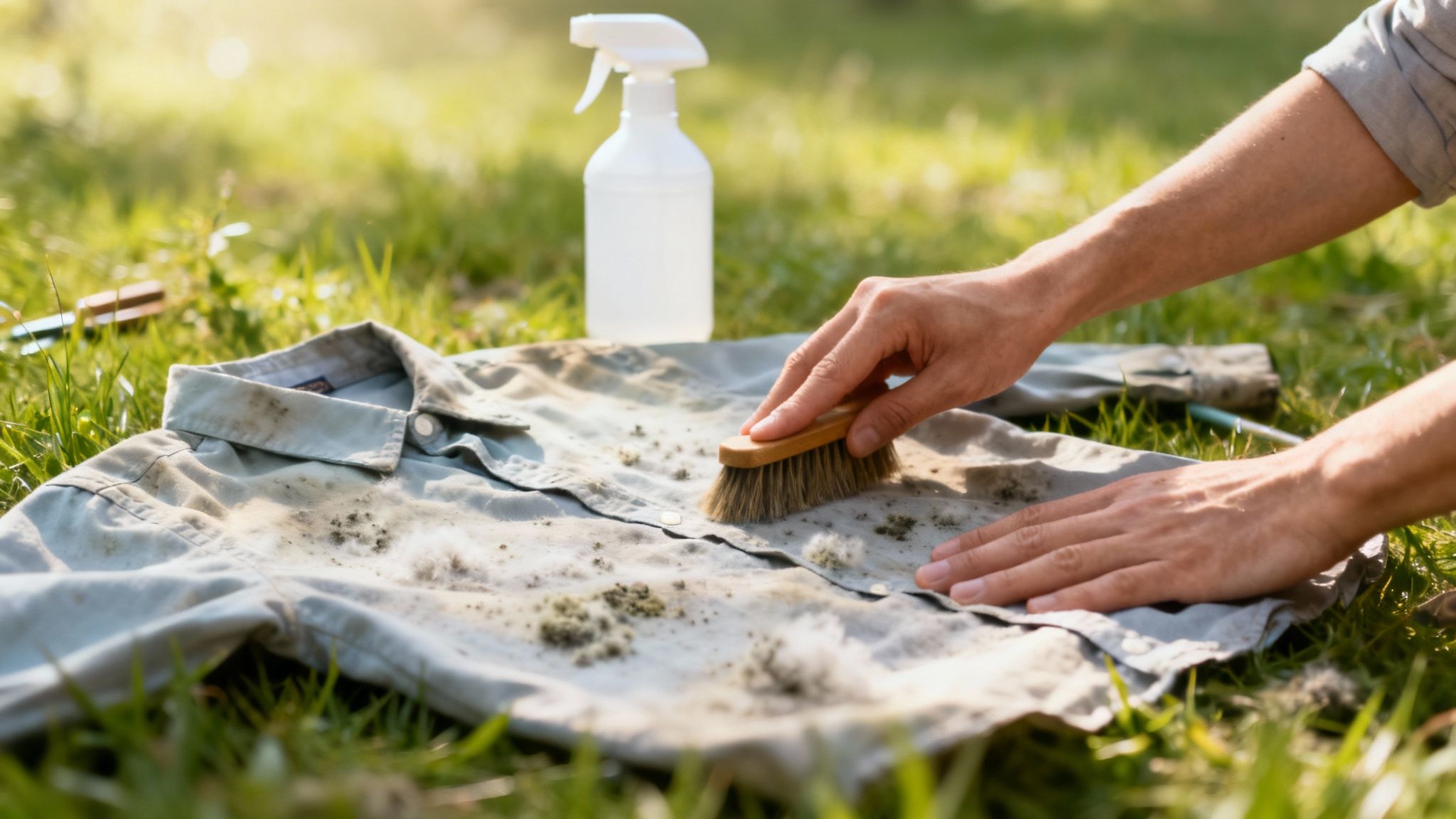
Finding mold on a favorite garment can feel like a lost cause, but it’s a battle you can absolutely win. The secret is a methodical approach that attacks the spores before, during, and after the wash cycle. This is about more than just tossing it in the machine; it’s a strategy, combining a targeted pre-treatment with a wash that respects the fabric while destroying the fungus.
First things first: always handle moldy items carefully. Take the clothing outside to brush off any visible, loose mold with a soft-bristled brush. This simple step prevents spores from spreading through your home and is surprisingly effective at minimizing the problem before you even begin treating it.
Pre-Treatment is Non-Negotiable
With the surface mold gone, it’s time to weaken its grip on the fibers. This pre-treatment phase is crucial, making the main wash infinitely more effective. You have a few powerful options, likely using ingredients you already have on hand.
- White Vinegar Spray: A classic for a reason. Mix one part white vinegar with one part water in a spray bottle, saturate the moldy areas, and let it sit for at least an hour before washing.
- Baking Soda Paste: For stubborn, concentrated spots, a thick paste of baking soda and water works wonders. Apply it directly to the mold, let it dry completely, then scrub it off with your brush.
- Borax Soak: A reliable fungicide, borax is perfect for tougher fabrics. Dissolve half a cup of borax in hot water, then add that solution to a bucket of cool water and let the garment soak for a few hours.
These methods start breaking down the mold’s structure, setting you up for a truly deep clean. While we're focused on clothing, these principles are universal. You'll find similar tactics in guides on how to get mildew out of carpet for good, proving just how effective they are.
Tailoring The Wash To The Fabric
Once your garment is pre-treated, it’s ready for the main event. How you wash it is just as critical as the prep work, and it must be customized to the fabric to avoid damage.
For durable whites—think cotton, denim, and linen—use the hottest water setting the care label allows. Heat is a powerful ally in your mission to get mold out of clothes. For an extra purifying boost on whites, you can add a small amount of diluted bleach, but always follow the product’s instructions carefully.
Delicate fabrics and colored items, however, demand a gentler touch. Hot water can cause fading or shrinking in materials like silk, wool, or certain synthetics, so a warm or cold wash is essential. This is where your pre-treatment really shines, having already done most of the heavy lifting.
The goal of the wash isn’t just to clean, but to create a neutral canvas. Active Scent's odor-free laundry detergent has been carefully formulated for a deep and effective clean, without competing fragrances. It's the ultimate neutral base, created to perfectly complement our range of luxury scented fabric softeners.
Some fragile pieces might not be able to handle a machine cycle at all. In these cases, learning how to handwash clothes properly with your chosen mold-fighting solution gives you total control. You can protect the fabric while ensuring a thorough, restorative clean.
Mold Removal Methods by Fabric Type
Choosing the right approach can feel overwhelming, so here’s a quick reference guide to help you match the treatment to the textile.
| Fabric Type | Recommended Pre-Treatment | Washing Method | Drying Method |
|---|---|---|---|
| Cotton (Whites) | Vinegar Spray or Borax Soak | Machine wash, hot water | Tumble dry high heat or sun dry |
| Cotton (Colors) | Vinegar Spray or Baking Soda Paste | Machine wash, warm/cool water | Tumble dry or sun dry |
| Denim | Borax Soak or Vinegar Spray | Machine wash, warm water | Tumble dry or hang dry |
| Linen | Vinegar Spray | Machine wash, warm water (gentle) | Line dry or tumble dry low |
| Synthetics | Baking Soda Paste or Vinegar Spray | Machine wash, cool water | Tumble dry low or air dry |
| Wool/Silk | Vinegar Spray (spot test first) | Hand wash, cool water | Air dry flat, away from direct sun |
Following these fabric-specific steps creates a repeatable process, ensuring you can restore your favorite garments to their pristine, mold-free state every single time.
The Critical Role of Drying in Mold Removal
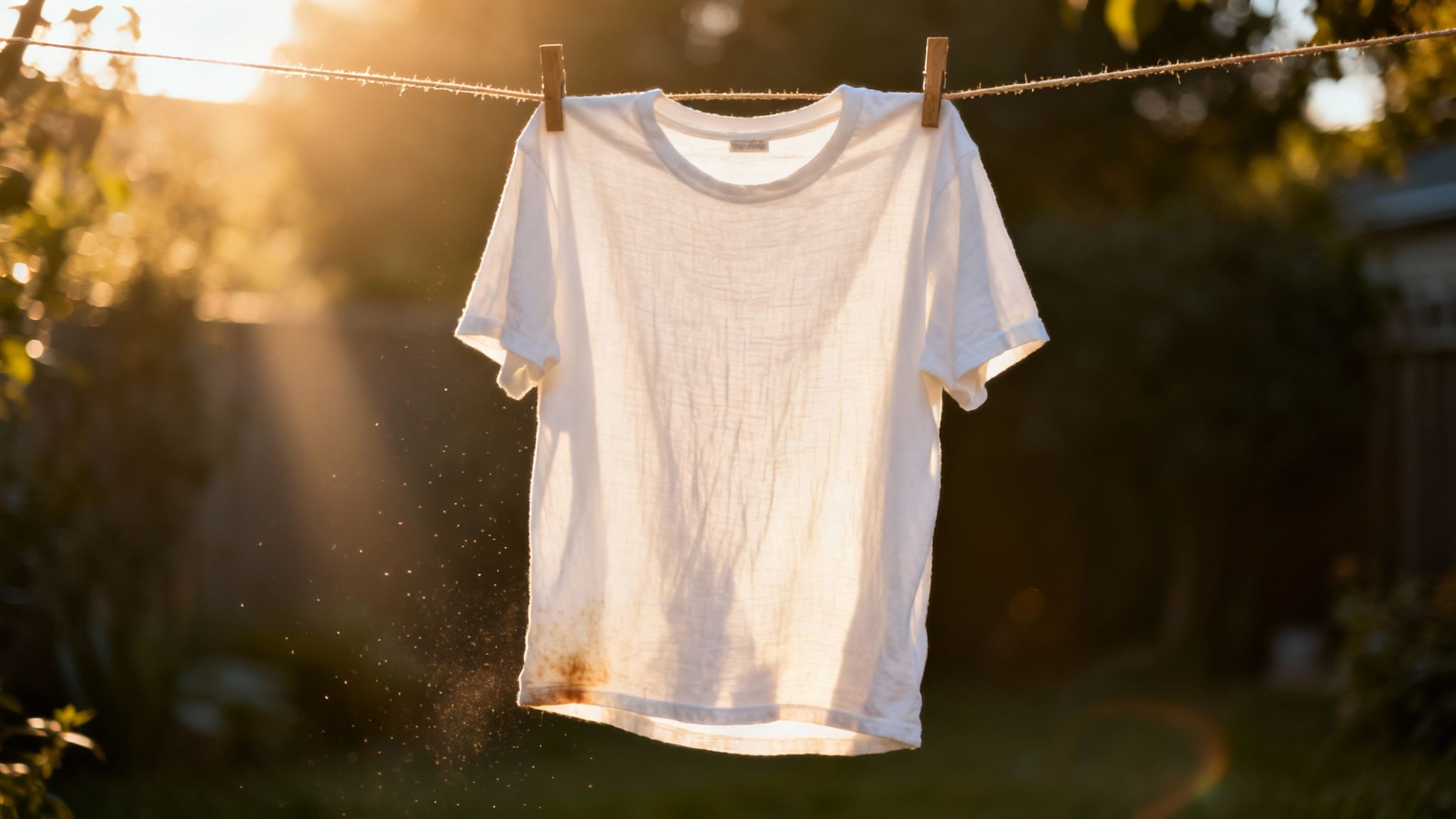
The battle against mold doesn’t end when the washing machine stops. In fact, the final drying stage is where you truly win or lose. Any hint of lingering dampness is an open invitation for spores to reactivate, quickly undoing all your hard work and bringing back that dreaded musty scent.
Proper drying is your ultimate weapon for neutralizing any remaining spores. Leaving a freshly washed load sitting in the machine—even for a few hours—creates a humid paradise perfect for mold regrowth. This common mistake can instantly reverse your progress, embedding those unwelcome smells deep into the fabric fibers all over again.
Harnessing the Power of Sun and Heat
Whenever possible, sunlight is your best friend. The sun's UV rays act as a powerful, natural sterilizer, killing off stubborn mold spores and even helping to gently bleach out faint, residual stains. Hanging clothes on an outdoor line to dry is a time-tested method that delivers a level of freshness a machine simply can't replicate.
Mold on clothing is a surprisingly common problem, usually driven by humidity and inadequate drying. Careful drying is essential to prevent regrowth, especially in damper climates.
If you’re using a machine dryer, heat is the key.
- For durable fabrics like cotton and denim, use the highest heat setting the care label allows. This is your best shot at evaporating every last bit of moisture.
- For more delicate items, a lower heat setting is the way to go. You might need to run the cycle a bit longer or dry in smaller loads to ensure they’re completely dry.
- Never overload the dryer. Proper airflow is non-negotiable for even, complete drying, which is crucial when you want to get mold out of clothes for good.
The goal is bone-dry. Before you fold and store anything, every seam, cuff, and pocket must be completely free of moisture. This uncompromising standard is your best defense against a mold comeback.
The Final Inspection
Before putting anything away, perform one last check. Bring the garment close and take a deep breath. Does it smell clean and neutral, or is there a faint, earthy hint of mustiness? A lingering odor means some spores likely survived, and the item may need another round of treatment.
Visually inspect the area where the mold was. Look for any remaining discoloration or fuzziness. A truly successful cleaning leaves the fabric looking and smelling fresh, ready for its next chapter.
And if you’re air-drying indoors, our guide on how to air dry clothes faster has some great tips to make sure everything dries completely and stays mold-free.
How to Banish Lingering Odors and Add Luxurious Scent
So you've waged war on the visible mold, but a ghost of its presence remains. That stubborn, musty odor that clings deep within the fabric can be the most frustrating part of the process—a lingering reminder of the problem you thought you solved.
Fortunately, this is a battle you can win, transforming your clothes from merely clean to truly revitalized.
Simple household staples are your first line of defense here. A cup of white vinegar added to the final rinse cycle or a half-cup of baking soda tossed directly into the wash drum can work wonders. Both are exceptional at neutralizing the acidic compounds behind musty smells, effectively resetting your garment’s scent profile back to neutral.
Creating a Clean Canvas for Luxury
Neutralizing odors is an essential first step, but why stop there? True restoration isn’t just about removing the bad; it’s about introducing the exceptional. This is where Active Scent makes all the difference, fusing powerful detergents with luxurious fragrances.
Using a powerful, odor-free laundry detergent is a strategic choice. It performs a deep, effective clean without any competing fragrances, creating the ultimate neutral base. Think of it as preparing a blank canvas, primed and ready to perfectly complement a luxury scented fabric softener. This approach ensures the scent you choose is the one that defines your clothes, not one that’s just masking what was left behind.
By eliminating the mold and its lingering scent, you create an opportunity to elevate your laundry from a routine chore into a bold statement. Each Active Scent product delivers a spark of joy, a touch of boldness, and a surge of confidence, all wrapped up in a powerful and EXCEPTIONAL product.
An Olfactory Statement Inspired by Icons
With a perfectly clean and neutral garment, you can introduce a fragrance that’s a bold tribute to the spirit of renowned fragrance houses. Imagine replacing that last hint of mustiness with a truly hypnotic and unforgettable scent experience inspired by iconic French houses like Dior, Mugler, Chanel, and Le Labo.
- Deep, earthy patchouli fuses with the burning radiance of amber.
- Fiery pimento berries ignite the composition with spice and warmth.
- Creamy tonka bean and rich guaiac wood envelop the fragrance in depth, while a touch of styrax adds a smoky elegance.
This is more than just making your clothes smell good; it’s about crafting a lasting impression. Our complete guide on how to make your clothes smell good explores this art in greater detail. These bold, mysterious scents don't just tell a story—they leave a mark of confidence and sophistication long after the laundry is done.
Keep Your Wardrobe Flawless and Mold-Free
You’ve reclaimed your favorite pieces from the clutches of mildew. Now, it's time to create a defense so strong it never dares to return. This isn’t about obsessive cleaning—it’s about cultivating an environment where mold simply cannot thrive.
It all starts with moisture. A pile of damp gym clothes or a forgotten wet towel becomes a mold paradise in less than 24 hours. The rule is simple: wash these items immediately, or at the very least, hang them up to air out completely before they join the rest of your laundry. Spills need the same urgent attention to stop moisture from setting into the fibers.
Master Your Storage Environment
Your closet is the front line in this battle. Overcrowding is the enemy of fresh, clean clothes. When garments are packed too tightly, humidity gets trapped, and air can’t circulate. Give your clothes some breathing room—a little space between hangers makes all the difference.
And please, ditch the plastic dry-cleaner bags. They’re notorious for trapping moisture, creating a personal greenhouse for fungal growth right on your favorite silk blouse. If you’re storing seasonal items, switch to breathable cotton garment bags or elegant fabric bins.
The secret to preventing mold is simple: control moisture and encourage airflow. A dry, well-ventilated space is mold’s worst nightmare, making these two elements your most powerful allies.
Curate Your Home's Climate
If you live in a humid climate or use a basement for storage, taking control of the environment is a true game-changer. A dehumidifier is your best investment, working tirelessly to pull excess moisture from the air and maintain that ideal 30-50% humidity level. It creates a space where mold spores just can't get a foothold, protecting not just your wardrobe but your entire home.
Incorporate these small rituals into your routine. They make a world of difference.
- A Weekly Airing: Once a week, just open your closet and wardrobe doors for a while. Let fresh air move through and refresh everything inside.
- Immediate Action: Never let wet or even slightly damp clothes linger. Wash or dry them right away. No exceptions.
- Breatheable Storage: Give your clothes the space they deserve. Think less plastic, more fabric.
By adopting these habits, you shift from reacting to a problem to preventing one entirely. This strategy ensures every garment in your wardrobe remains impeccably fresh, clean, and ready to make the bold, confident statement you intend.
Your Questions About Mold on Clothes, Answered
Even when you know the steps, dealing with mold can bring up a few tricky questions. I've been there. Let's walk through some of the most common issues so you can get your favorite fabrics back to their pristine, beautifully scented state.
Can I Use Bleach on My Colored Clothes to Kill Mold?
Using standard chlorine bleach on your colored fabrics is a one-way ticket to faded, splotchy heartbreak. It's just too aggressive for most dyes and will strip the color right out.
Your best bet is to reach for a color-safe alternative like an oxygen bleach. A pre-soak in a borax solution also works wonders. Whichever you choose, always do a quick spot test on an inside seam first. A small, hidden test is all it takes to make sure your fabric's vibrant color stays exactly where it should be.
Will a Regular Wash Cycle Get Rid of Mold?
It’s tempting to just toss moldy clothes in the wash and hope for the best, but a standard cycle rarely gets the job done. It might wash away some surface spots, but it won't kill the stubborn mold spores that have burrowed deep into the fibers. You'll almost certainly be left with that musty, lingering odor.
To truly solve the problem, you need a more focused approach. Pre-treating with a mold-killer like white vinegar is a non-negotiable first step. Follow that with a wash in the hottest water your fabric can handle. This one-two punch is what actually eliminates the problem for good.
The goal isn't just to rinse away the evidence; it's total spore annihilation. A targeted treatment creates a truly clean slate—the perfect canvas for an unforgettable, luxurious fragrance.
My Clothes Still Smell Musty After Washing. Now What?
Don't be discouraged. A lingering musty smell just means a few resilient spores survived the first round. It's a clear sign you need to bring in reinforcements for a second wash.
Try running the items through another cycle, but this time, add one cup of white vinegar to the rinse or a half-cup of baking soda directly into the drum with your detergent. Once washed, getting them completely dry is key. If you can, hang them in direct sunlight—the UV rays are fantastic at neutralizing any last trace of odor. If the scent still hangs on, it's time for a longer soaking treatment.
Do I Really Need to Clean My Washing Machine After This?
Yes, and this step is absolutely critical. Mold spores are experts at hiding in the nooks and crannies of your washer—the drum, the rubber seal, the dispenser drawer—just waiting to cross-contaminate your next load of pristine laundry.
Protect the rest of your wardrobe by sanitizing your machine right away. Just run an empty cycle on the hottest setting with either a cup of bleach or a dedicated washing machine cleaner. This ensures your machine is a clean, fresh environment for all future washes.
Now that you've conquered mold and its unwelcome odors, it's time to reward your fabrics. At Active Scent, our lead perfumer and aroma designer masterfully master light and shadow, using premium and ethically sourced ingredients to capture the essence of contemporary individuality. LAUNDRY NEVER SMELLED SO GOOD! Explore the collection at https://active-scent.com.


